
Cartels Discover Nobody Controls the Money Supply
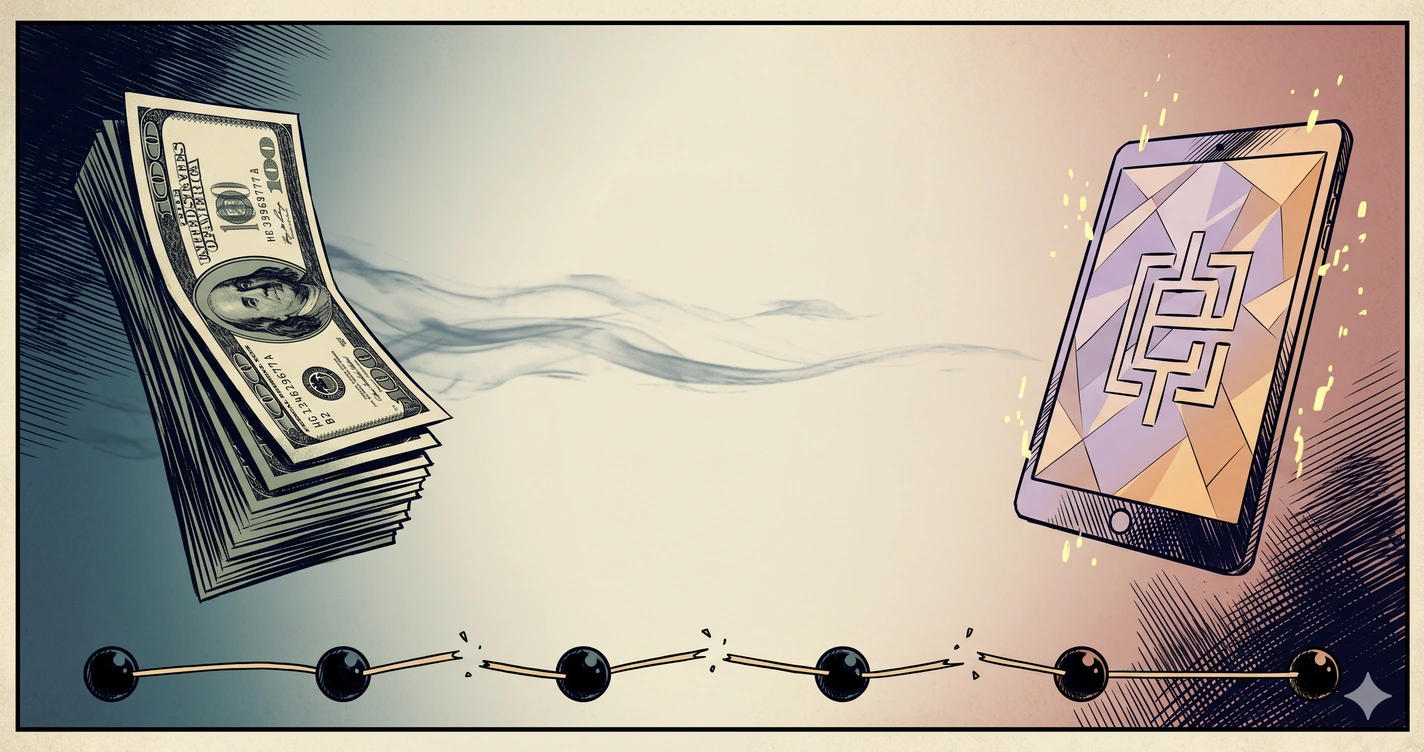
Four days after the April 8 eclipse, five Trump operatives in Durango sent the Boogaloo Boys militia to threaten Joint Chiefs of Staff, embassy personnel, and their families with no demand attached, then pitched a 20 to 25 percent Treasury laundering scheme to the worldwide cartels. The test transaction failed because dollar bill serial numbers do not match the encrypted allocation numbers in the Alpha system. Cartels now realize that neither the US Government, the Federal Reserve, the Rothschilds, nor the Silent Circle control the money supply.
1. Threats from Durango with no demand attached
After the April 8 eclipse yielded no new leverage for them, the five Trump operatives based in Durango deployed the Boogaloo Boys, a loosely organized patriot militia made up mostly of untrained civilians and some veterans who take orders from the political right. They sent the militia to threaten the Joint Chiefs of Staff, embassy personnel inside Washington DC and abroad, and the families of those officials.
What is unusual about these threats is that there is no demand attached. Normally a threat ends with “if you do not do X, then we will come get you.” In this case the X is missing. Security in DC was tightened in response, but there is no actual catastrophic event likely to land out of this deployment. The orders were traced back to the Durango operatives, and the primary purpose is distraction. The Trump operatives have no money to pay anyone, so the threats have no punchline behind them.
That conclusion is why the threats came out as pressure without a concrete ultimatum. Distraction without follow-through.
The Trump operatives know by now that I will not support Trump returning to the White House. With no money to spend and no leverage from the eclipse, threats without demands were the only move they had left. So they pivoted to a different play.
2. The 20 to 25 percent Treasury pitch
The Trump operatives walked into the US Government, the Treasury, and the cartels with a new pitch. They proposed themselves as a replacement for the now defunct Silent Circle and Black Nobility money laundering operation. Their offer to the cartels was a discount: 20 to 25 percent fee on each laundered transaction, compared to the Silent Circle’s standard 35 percent.
To make this work, the Trump operatives needed three things in place. They needed Secret Service cooperation, since the Secret Service’s primary mandate is protecting the US dollar and, historically, the Federal Reserve’s interests. They needed clearance for officials at multiple agencies to look the other way during test transactions. And they needed enough political cover from the deal to claim a viable path back to the White House funded by cartel money.
The arithmetic, however, only works if the underlying transaction mechanism functions. As I will explain in the next section, it does not.
The operatives had a plan, three required permissions, and a discount price. What they did not have was a working test.
3. Why the test failed at the allocation number
The operatives tried a real test. They used actual physical cash, took the allocation numbers printed on those bills, inserted the money into a remote server, and attempted to get it registered into the banking system. Their logic was that allocation numbers represent real money, so the transaction would clear.
It did not clear. The allocation number on the bill does not match the allocation number that is digitally registered when a bill goes into the system or comes out of the system. The physical serial number printed on a piece of currency and the cryptographic digital allocation number sitting on the back end of the banking system are two separate objects. The encrypted digital ones originate from the Alpha system, which is mine.

The Trump operatives, the officials they looped in, and the Treasury itself were working only with the front office. The back end is what actually controls whether cash enters or leaves the system, and they did not have access to it.
Either the US Government and Treasury did not know any of this, or they knew and tried anyway. Either way, none of them understand how money actually enters or leaves the system. The operatives had anticipated this outcome and planned to blame me to the cartels, hoping the cartels would retaliate against me. That plan backfired. I have known cartel contacts through the Silent Circle for nearly a decade. I have met them in person, and I have previously negotiated with them on transitions out of harmful businesses. The attempt to frame me instead alerted the cartels to something more important: the Silent Circle leadership, who had been charging them 35 percent, is no longer functional.
4. What the Universal Trust actually was
The Universal Trust functioned as the private equivalent of SWIFT for the off-market world. It moved interbank transfers visible only to its operators, never to regulators. It served as the primary money laundering pipeline for every black market category: human trafficking, drug running, off-market oil, gold, diamonds, and all major commodities. It charged a 35 percent fee on each transaction, with a portion of that fee feeding the bankers, agency operatives, and intermediaries needed to ensure deposits landed correctly on the other side.
The operational functionality continued past the agreement’s expiry, which is how the Trust kept running on momentum alone, until the eclipse-era disconnections finally cut it.
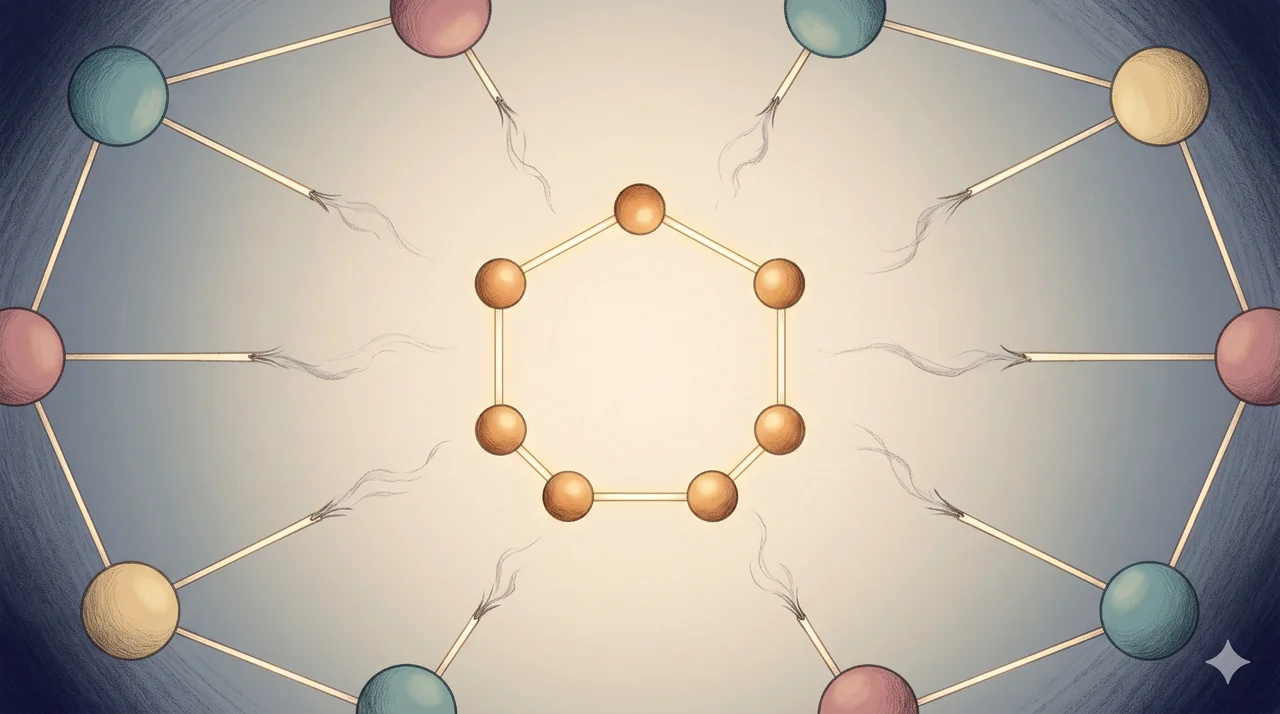
The loss of the Universal Trust is why the cartels are now sitting on hundreds of billions of dollars in cash with nowhere to put it. Around the Mnuchin era at Treasury, the cartels lent $786 billion that was never repaid. The Silent Circle had also been quietly hoping the Trump operatives’ Treasury maneuver would succeed, because the Silent Circle believed they could pull their own money out through the same opening. That failed too. On Saturday, April 13, the cartels are scheduled to meet to discuss their path forward.
5. Every industry has a cartel: the 1975 plan
In 1975, George H.W. Bush (in his cosmic role as the Black Dragon) implemented what was called the Non-Compete Plan. Every global industry was placed under a cartel structure designed to prevent competition: oil, gold, human trafficking, legal and illegal drugs, pharmaceuticals, diamonds, food commodities. The cartel’s role was to ensure no competitor emerged with a better product and to coordinate with organized crime for enforcement at the supply chain level.
The diamond industry is the cleanest example. The Gemological Institute of America, controlled by the Order of the Black Sun and held in the Rothschilds’ name, registers every cut diamond with an identification number. This is how the Black Sun takes its cut from every diamond sale. Real diamonds are swapped for fakes, then the real stones are handed to hedge funds or BlackRock as credit collateral against gold. Sanctions on countries like Russia do not stop this trade, they simply route it through the black market via cartel channels. Tiffany and similar corporations continue to receive product through that same pipeline.
The same structure applies to oil. Extraction cost is roughly $0.50 per barrel of raw oil. The market price (around $90 per barrel at the time of this report) is a function of cartel control, not extraction economics. On the black market, oil trades for $1 to $25 per barrel. International sanctions on oil do not interrupt this. They simply cut everyone into the black market distribution chain, including the sanctioned countries themselves, which continue selling. China currently buys oil from Iraq and Iran at $1 per barrel. Zimbabwe gold and similar commodity situations follow the exact same pattern.

The oil example shows the same logic from the supply side. A commodity that costs almost nothing to extract is priced 180 times higher at market, and the difference is the cartel margin. Sanctions just push it to a different channel.
6. What the cartels know now, and the door I am leaving open
The cartels have just figured out that the US Government does not control its own currency. The Federal Reserve does not control the currency. Even the Rothschilds tried to cut their own deal, and the cartels figured out the Rothschilds do not control the money supply either. Worldwide cartels are not unintelligent organizations. They move goods across borders at scale. But they are in shock, because the Silent Circle cannot control anything anymore, the Trump operatives cannot move money, and no party left standing can put their backlogged cash into the banking system. Agency operatives and intelligence community people are reaching the same realization.
I am willing to negotiate with cartels willing to make a transition. My conditions are clear. No 20 to 25 percent payment to the US Government, because I will not fund an institution that delivers nothing for it. Cartels operating in industries that actively harm humanity (human trafficking, certain drug operations) would need to transition out of those businesses into ones that benefit humanity. Oil cartels could redirect their distribution infrastructure to something better. The vast global transportation networks the cartels run could be repurposed for the movement of beneficial goods.

If even a portion of that infrastructure is repurposed toward beneficial goods movement, commodity prices fall, supply chains repair themselves, and the same logistical capability starts serving humanity rather than draining it.
The alternative, if the cartels reject the offer, is that the black market collapses on its own timeline and the cartel organizations cease to exist. The loss of their infrastructure is also the loss of a potential tool for human benefit. The offer is extended to those willing to make the transition.
That has been the GIA report for April 12, 2024.